Boldwood play mainly forgotten tunes from 18th century England, painstakingly researched and liberated from lost manuscripts and the extraordinary (to us) phenomenon of dance fans. This 3/2 hornpipe was discovered by Becky Price in an unpublished handwritten manuscript in the British Library.
Boldwood
Becky Price (accordion), Miranda Rutter (fiddle, viola), Matthew Coatsworth (fiddle, viola)
(From Boldwood’s 2012 unreleased second album Mudlarking, available on Soundcloud here.)
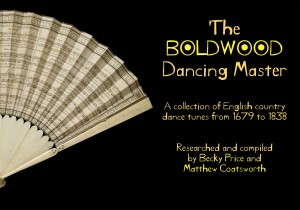
The dots for The Miller of Perth are published in The Boldwood Dancing Master, available from the Boldwood website – along with a brilliant new CD – and also on Matthew Coatsworth’s fascinating website ‘English and French Music: an online manuscript’.
For more information and another great Boldwood tune, see Fiddletails post Jackson’s Shaving Brush (June 2015).
This Tennessee old-time tune is simple in structure, but its chiming arpeggios are great fun to play on fiddle and banjo – and hopefully on box/accordion too, which I understand often don’t gel with old-time tunes.
Three videos featured in this post: one solo fiddler, one fiddle/banjo concert performance, and a link to an excellent teaching video.
Newt Payne
Fiddler and banjoist Newt Payne (1904-1977) was born on South Pittsburg Mountain, Tennessee, and worked most of his life as a miner.
The only recordings of his music are on a 2003 CD* by another Tennessee fiddler, Bob Townsend, who heard Newt play as a child. One tune was untitled, so Bob called it Newt Payne’s Tune as it was known as a Payne family tune that Newt used to play at dances. (See banjohangout)
* Old Time Fiddlin’ Tunes From The South Cumberland, available here.
Cross-tuning
Newt Payne’s Tune makes a good introduction to playing fiddle cross-tuned – a traditional feature of American old-time fiddling,with that unmistakable sympathetic ring characteristic of open tunings. All three versions below are in either open G or open A, so you can take your pick of which you’d like to tune to and play along with! (It’s worth noting that fingering is identical in GDGD and AEAE – ie, the same fingering works for the different keys because the tunings are at different pitches.)
Of course, you can still play the tune in standard tuning GDAE, though it will be more difficult to catch the lower drones, and the glorious ring will be lost.
(Note for the financially-challenged: It’s cheaper to play cross-tuned in A (AEAE) as the lower strings are far more forgiving of being tuned back and forth. If you play in cross-tuned in G (GDGD), for example, there’s a tendency for the top string to break once you’ve retuned it back up to E a couple of times.)
(See below for more information on cross-tuning, and blog post ‘Falco’/25.6.2015 for a good English tune to try cross-tuned.)
Katie Henderson (fiddle)
A resounding version in G (fiddle tuned GDGD/Sawmill tuning), recorded for Katie’s long-running, encyclopaedic New Tune A Day project.
Katie’s newtuneaday.blogspot and Youtube channel are stuffed with brilliant tunes, and well worth rummaging around in. She has also compiled a NTAD tunes e-book, available through her blog.
Stephanie Coleman (fiddle), Adam Hurt (banjo)
Adam and Stephanie weave their magic around Newt’s tune at the Sore Fingers Summer School, Oxfordshire, UK, April 2010. (Love that quirky bass line!) Key: G (GDGD/Sawmill tuning)
Click for more information on Stephanie Coleman and Adam Hurt. (Adam will be teaching banjo at American Banjo Camp 2015, 11-13 September, at the stunning Fort Flagler State Park, Nordland, Washington State.)
Sophie Enloe (fiddle), Maggie Lind (banjo), Patrick Lind (guitar)
A really clear and well-paced teaching video here, produced by a trio of tutors from the Portland Old Time Stringband Class. (I’ll embed the video once I’ve received full permissions from all players). Key: A (AEAE/cross-tuned).
Fingering note: unlike standard tuning, the fingering here plays the same notes (an octave apart) on both pairs of strings. (It’s worth noting that fingering is identical in GDGD and AEAE – ie, the same fingering plays in different keys because the tunings are at different pitches.)
The Portland Old Time Stringband Class YouTube channel habibanola has many old-time videos, with more accessible via their website neighborlymusic.net.
So you thought you could play violin…? – cross-tunings for those hell-bent on going over to the dark side:
(NB: This set of tunes is a double post to cover next week as well, when I’ll be fiddling away on the EAC Summer School somewhere in deepest Gloucestershire, and nowhere near a computer!)
The Muffler composed by Jon Swayne; Bhaskar’s composed by Barn Stradling. From the Blowzabella album Strange News.
A pair of breezy mazurkas to wish Cool Spinnings to Alasdair Paton and all the courageous amateur cyclists taking on the gruelling Étape du Tour in the French Alps this Sunday 19 July.
Blowzabella
Andy Cutting (diatonic button accordion, triangle), Jo Freya (vocals, clarinet, bass clarinet, soprano and tenor saxophones, whistle), Paul James (border bagpipes, soprano and alto saxophones, whistle), Gregory Jolivet (alto hurdy-gurdy), Dave Shepherd (violin, octave violin), Barn Stradling (acoustic bass guitar, octave bass guitar), Jon Swayne (border bagpipes, soprano and alto saxophones)
For upcoming gigs, band news, and to possess Strange News in the flesh, go to Blowzabella’s website, here.
Controcanto
Ernesto Voena (diatonic accordion), Angelo Girardi (bass guitar), Giulia Tomasi (violin), Arcangelo Divita (clarinet), Luigi Mingoni (flute), Marco Gajon (guitar)
This group from the Piedmont region of north-west Italy specialises in playing for folk dances. The dancers in this video show the lilting rhythms of the mazurka steps.
A delightfully almost-danceable crooked Kentucky tune that repeats across the whole fiddle range.
William Hamilton Stepp (1845-1947) recorded the tune in 1937 for the Library of Congress – the last of the Kentucky fiddlers to be captured on disc machine by Alan and Elizabeth Lomax during their Kentucky song-collecting expedition. ‘Fiddler Bill’ Stepp was a close friend of fiddler John Salyer (see ‘Last of Harris’, 22 May 2015).
Andy Fitzgibbon
Andy’s teaching video for the 2014 Cowan Creek Mountain Music School. Standard tuning GDAE.
Andy notes: ‘As played by William Hamilton Stepp for the Library of Congress in 1937.’
Andy Fitzgibbon plays with the Iron Leg Boys, and is part of the New Young Fogies project co-run by Anna Roberts-Gevalt (of Anna & Elizabeth: see ‘Billy in the Lowground’ 7 May 2015)
With media recently marking the 200th anniversary of the Battle of Waterloo, I offer this jaunty Morris tune (for those who prefer their titles rather more pc, sometimes known as Travel By Steam.)
Nick Hart (MacCann duet concertina)
A brief (but beautifully-formed) in-house recording from a Saturday Workshops Ensemble class, Cecil Sharp House, London.
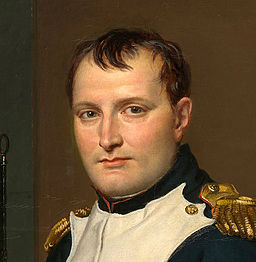
This savage event was the last battle of the Napoleonic Wars. On that one day, some 47,000 died (not including prisoners and missing). Just three years earlier, French Neoclassical painter David had painted a portrait of Napoléon Bonaparte, of which this is a detail.
(Jacques-Louis David: The Emperor Napoleon in His Study at the Tuileries, National Gallery of Art, Washington, DC)
Perhaps my favourite tune in the whole wide, sky-filled world.
Paul James’s wild rant*, named for falcons, whirls and tumbles and jinks like the Red Kites I watched playing on the Ridgeway thermals near Monks Risborough one summer evening.
Two videos: the first, dancetastic band Blowzabella recording the tune for their album Strange News; the second, Paul’s teaching video.
Blowzabella
Several of the band’s musicians are multi-instrumentalists. The line-up here is:
Andy Cutting (triangle), Jo Freya (bass clarinet), Paul James (bagpipes), Gregory Jolivet (hurdy-gurdy), Dave Shepherd (violin), Barn Stradling (acoustic bass guitar), Jon Swayne (bagpipes)
Paul teaching Falco on border pipes, fast and slow; first in F, then in G from 4:38.
(Note to fiddlers: I like to play this tuned GDGD – gets a little of that pipes/gurdy drone sound. However, E strings don’t last long with all that tuning back up again, so if you want to play cross-tuned, perhaps best to use AEAE, and stick to standard tuning if you want to play along with Paul’s pipes or other non A-friendly instrument.)
(‘Paul James of Blowzabella playing the tune “Falco” on border bagpipes’ YouTube video, 8:58. Posted by Paul James, 28 Nov 2013. https://www.youtube.com/watch?v=aICsx8Ig820)
* Rant: a dance with a rhythmic, percussive step (not someone having a right go on social-media!)
For more information on Blowzabella’s gigs, recordings etc – and the fantastic all-dancing, all-playing Blowzabella Days:
This candidate for my Best Title Ever award dates from about 1800. It’s played here in a set with Wedding Shoes.
Boldwood
Becky Price (accordion), Miranda Rutter (fiddle, viola), Matthew Coatsworth (fiddle, viola)
Boldwood’s core repertoire stems from forgotten tunes played back into life from obscure manuscripts dating largely from 18th century England – a wondrous musical era when, their website says, “the worlds of folk and classical music happily co-existed and inspired each other to produce rich and fascinating instrumental music”.
This recording is from the group’s 2012 unreleased second album Mudlarking, available on Soundcloud (https://soundcloud.com/boldwood)
They have a new EP out, full of wonderfully earwormy tunes; and their first CD, the dance-inducing Feet, Don’t Fail Me Now, is a real treat. For details of how to get your hands on a copy, see their website: http://www.boldwood.org
The dots for Jackson’s Shaving Brush can be found in The Boldwood Dancing Master – a musical treasure-trove of over 70 tunes available from the website. The cover photo alone taught me things I didn’t know about all those Austen balls: next time I’m in Oxford, in the Ashmolean, I’ll tear myself away from my old friends the Stradivarius guitar and Powhatan’s Mantle and the mediaeval bishops’ rings, and make the acquaintance of Dance Fan for the Year 1789!
Every couple of weeks or so I feature a tune that's caught my fancy – audio/video clips of brilliant musicians playing great, perhaps uncommon tunes to learn by ear. Most are from the English and American Old-time traditions; some hail from other musical worlds ‒ Scandi, perhaps, or French. But whatever you play ‒ fiddles or frets, free-reeds or fipples ‒ I hope you enjoy catching these wonderful tunes!

 The dots for The Miller of Perth are published in The Boldwood Dancing Master, available from the Boldwood website – along with a brilliant new CD – and also on Matthew Coatsworth’s fascinating website ‘English and French Music: an online manuscript’.


 Jenny Glover's FIDDLETAILS